

Enterprise Cloud Architecture & DevOps
Amazon AWS Cloud Architecture Consulting & DevOps Cloud Engineering
I architect, automate, and secure enterprise infrastructure on Amazon Web Services: from multi-region container clusters on EKS and high-throughput serverless microservices on Lambda, to Aurora database clusters and Well-Architected governance.
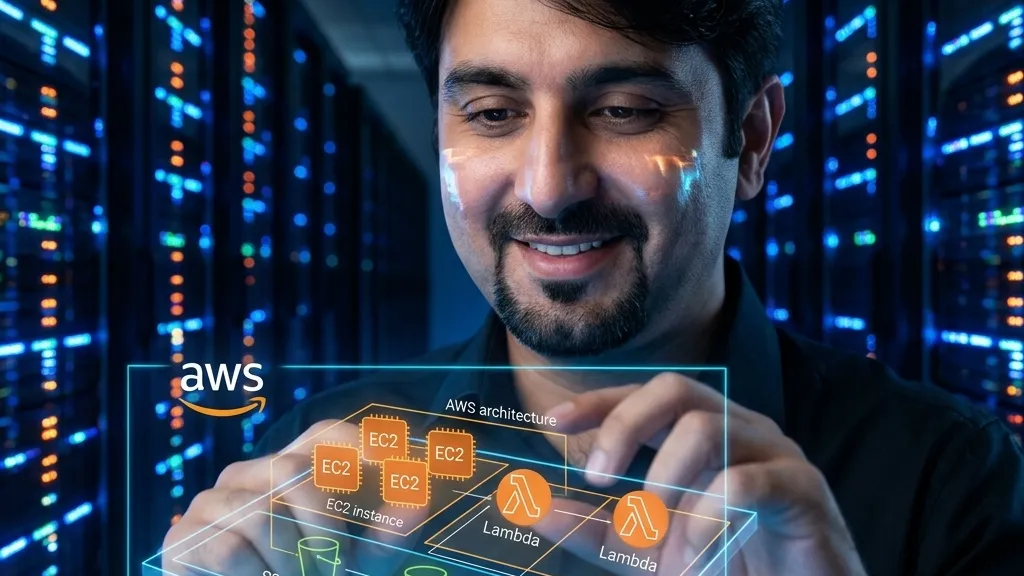
What Is Amazon AWS Cloud Architecture Consulting?
Amazon AWS Cloud Architecture Consulting is an enterprise systems engineering discipline that designs, provisions, and secures scalable cloud environments across AWS infrastructure. It unites multi-AZ container runtimes (EKS, ECS Fargate), event-driven serverless functions (Lambda), distributed databases (Aurora), and Terraform IaC to achieve 99.99% availability aligned with the AWS Well-Architected Framework.
Why I Architect on Amazon AWS: Enterprise Reliability Standards
Enterprise platforms engineered to the AWS Well-Architected Framework, automated via Terraform, and monitored 24/7.
Critical AWS Architectural Challenges & Cost/Security Traps
Four systemic infrastructure failure points that trigger security breaches, operational outages, and budget overruns if unaddressed.
Permanent IAM User Key Leaks
Generating long-lived access keys for developers or CI/CD pipelines exposes AWS environments to account takeovers. I enforce IAM Roles with OIDC federation and AWS IAM Identity Center, eliminating static access credentials.
Idle NAT Gateway & Data Egress Charges
Deploying redundant NAT Gateways across multiple AZs without VPC Endpoints generates massive idle hourly costs and data transfer bills. I implement AWS PrivateLink and optimized routing topologies to reduce network overhead.
Single-AZ Database Failover Vulnerabilities
Running standalone RDS instances without automated multi-AZ replication creates catastrophic recovery time objectives during hardware outages. I deploy Amazon Aurora Multi-AZ clusters with continuous backup and sub-30s failover.
Uncontrolled Compute Overprovisioning
Leaving static EC2 instances sized for peak holiday traffic running 24/7 wastes 40% of infrastructure budgets. I implement Karpenter intelligent pod scheduling on EKS and Compute Savings Plans to stabilize expenses.
Engineered Architecture: Production Topology & Security Perimeter
Technical Blueprint
Disciplined Engineering Over Uncontrolled Cloud Sprawl
AWS gives engineering teams immense power, but that power demands architectural discipline. Without rigorous IaC and FinOps guardrails, AWS environments easily devolve into costly, fragile setups.
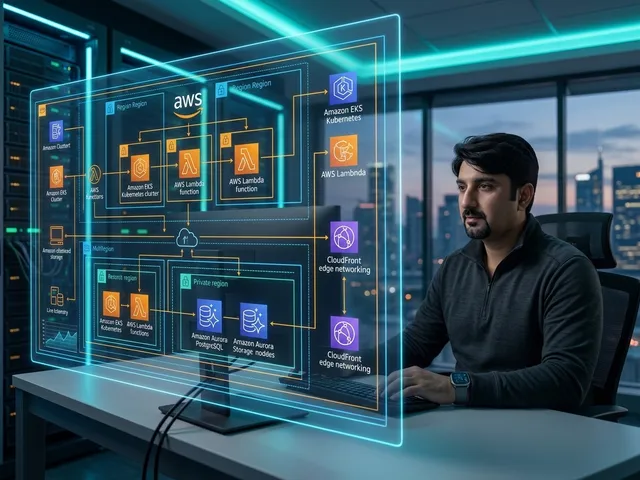
# Production Traffic & Security Ingress Flow
[Client Ingress] → (CloudFront Edge PoP / AWS WAF Inspection)
→ [Application Load Balancer / Amazon API Gateway]
→ [Private Multi-AZ VPC Network with AWS PrivateLink]
• Compute Tier: Amazon EKS Pods (Karpenter) & Lambda Serverless
• Data Tier: Amazon Aurora Multi-AZ (PostgreSQL/MySQL) & DynamoDB
• Storage Tier: S3 Private Buckets with Origin Access Control (OAC)
→ [IAM Perimeter]: OIDC Workload Identity & IRSA (Zero Static Keys)
Multi-AZ Availability & Karpenter Scaling
EKS worker nodes and ECS Fargate tasks distribute dynamically across three Availability Zones. Karpenter provisions right-sized EC2 capacity in seconds based on pending pod compute requests.
Serverless Edge & Event-Driven Compute
CloudFront terminates TLS at the edge with AWS WAF security inspection, proxying dynamic API traffic to API Gateway and serverless Lambda functions that scale to zero under low volume.
Zero-Trust IAM & AWS Organizations
Multi-account segregation via AWS Control Tower. Service Control Policies (SCPs) restrict unauthorized actions, while IAM Roles for Service Accounts (IRSA) scope pod privileges to exact resources.
FinOps Governance & Lifecycle Automation
Continuous cost optimization with Compute Savings Plans, S3 Intelligent-Tiering transition rules, and automated AWS Cost Anomaly Detection alerting teams to abnormal spending spikes.
Authoritative Architecture Framework
“The AWS Well-Architected Framework helps cloud architects build secure, high-performing, resilient, and efficient infrastructure for a variety of applications and workloads across six foundational pillars: operational excellence, security, reliability, performance efficiency, cost optimization, and sustainability.”
Every architecture engagement I lead directly aligns with the AWS Well-Architected Framework: operational excellence through modular Terraform automation, built-in security via IAM Identity Center, and financial efficiency using continuous FinOps audits.
Enterprise Operating Model: Fragile ClickOps vs Engineered Cloud
Comparing ad-hoc console administration against automated, Terraform-governed Amazon AWS cloud engineering.
| Architectural Dimension | Engineered AWS Architecture (iGoher Standard) | Unmanaged ClickOps Administration | Generic Shared Multi-Tenant Cloud |
|---|---|---|---|
| Provisioning & State Management | 100% Terraform/OpenTofu IaC modules with state locking in S3 buckets and DynamoDB. | Manual AWS Management Console button-clicking; undocumented setups and configuration drift. | Proprietary web panels with zero Git tracking or automated deployment pipelines. |
| Identity & Access Management (IAM) | IAM Roles with OIDC federation and IAM Identity Center; zero permanent access keys. | Static IAM user access keys downloaded to developer workstations and committed to repos. | Shared root passwords and persistent API tokens with no access expiration policies. |
| Compute Runtime & Autoscaling | Amazon EKS with Karpenter intelligent auto-scaling and serverless ECS Fargate tasks. | Oversized static EC2 instances running 24/7 with zero traffic-based scaling policies. | Fixed virtual servers with rigid resource limits and noisy neighbor performance drops. |
| Database High Availability & Failover | Amazon Aurora Multi-AZ with storage-level replication and automated sub-30s failover. | Single-AZ RDS instances without automated replication or continuous point-in-time recovery. | Shared database instances with nightly mysqldump scripts and extensive data loss windows. |
| Cost Optimization & FinOps | Compute Savings Plans, S3 Intelligent-Tiering, Cost Anomaly Detection, and budget alerts. | Idle NAT Gateways, orphaned EBS volumes, and runaway spend discovered only upon billing. | Opaque billing bundles with hidden network transfer fees and high exit penalties. |
| Edge Ingress & DDoS Protection | CloudFront edge network with AWS WAF inspection, Origin Access Control, and Shield protection. | Public EC2 instances exposed directly to the internet with standard security groups. | Basic reverse proxies without edge caching or Layer 7 web application firewalls. |
Implementation Lifecycle
Structured 4-Phase AWS Cloud Engineering Delivery Process
A predictable, phased delivery roadmap transforming legacy infrastructure into automated, enterprise-grade Amazon Web Services topologies.
- Phase 01
Discovery & Well-Architected Audit
Examine existing workloads, IAM policies, VPC routing, and monthly billing to identify security vulnerabilities, single points of failure, and cost leaks.
Duration: Week 1
- Phase 02
Terraform IaC & VPC Foundation
Author modular Terraform modules establishing AWS Organizations, isolated multi-AZ subnets, AWS PrivateLink endpoints, and AWS WAF security rules.
Duration: Weeks 2–3
- Phase 03
Container & Database Migration
Deploy microservices to Amazon EKS or ECS Fargate, establish CI/CD pipelines with OIDC Workload Identity, and execute database replication to Aurora.
Duration: Weeks 4–5
- Phase 04
Production Cutover & FinOps
Shift DNS traffic incrementally via Route 53 and CloudFront, verify CloudWatch alarms, purchase Compute Savings Plans, and deliver team documentation.
Duration: Week 6
Core AWS Services I Engineer for Client Workloads
Authoritative implementation across compute, container, database, networking, and serverless ecosystems.
Amazon EKS & ECS Fargate
Container execution platforms. I build production EKS clusters with Karpenter autoscaling and ArgoCD GitOps, alongside serverless ECS Fargate for lightweight microservice workloads.
AWS Lambda & API Gateway
High-throughput serverless microservices. Executes event-driven logic in milliseconds with automatic horizontal scaling, zero idle costs, and integrated SQS/SNS queue triggers.
Amazon EC2 & Auto Scaling
Elastic virtual compute. I configure custom Launch Templates, Multi-AZ Auto Scaling Groups, Graviton processor migrations, and automated CloudWatch alarms for peak traffic events.
Amazon Aurora (PostgreSQL/MySQL)
Enterprise cloud-native relational database. Delivers up to 5x throughput of standard MySQL with distributed storage, continuous backup, and sub-30s automated failover.
Amazon DynamoDB & ElastiCache
Fast caching and NoSQL databases. In-memory Redis/Memcached clusters for microsecond session storage paired with fully managed single-digit millisecond DynamoDB tables.
Amazon S3 & CloudFront CDN
Global asset distribution and storage. Secure private S3 buckets with Origin Access Control (OAC), edge caching, CloudFront SSL termination, and automated lifecycle archiving.
AWS WAF & CloudWatch Monitoring
Perimeter security and full observability. Real-time bot protection, SQLi and XSS filtering, automated CloudWatch metric alarms, and centralized OpenSearch log aggregation.
IAM Identity Center & Security Hub
Centralized identity governance. Role-based access control (RBAC), temporary credentials via OIDC federation, and continuous compliance checks aligned to CIS benchmarks.
Amazon VPC & Transit Gateway
Enterprise software-defined networking. Isolated subnets, NAT Gateways, VPC Peering, private endpoints, and Transit Gateway routing connecting hybrid corporate data centers.
Amazon AWS Production Stack Architecture Matrix
A comprehensive overview of the technological layers and components engineered in every enterprise AWS deployment.
Compute & Containers
Amazon EKS, ECS Fargate, EC2 Graviton instances, AWS Lambda functions, and Amazon Elastic Container Registry (ECR).
Data & Databases
Amazon Aurora PostgreSQL, Aurora MySQL, DynamoDB, ElastiCache Redis, Amazon DocumentDB, and Amazon OpenSearch.
Networking & Content Delivery
Amazon Route 53, CloudFront CDN, Application Load Balancers, Network Load Balancers, AWS Transit Gateway, and PrivateLink.
Storage & Lifecycle
Amazon S3 Standard, S3 Intelligent-Tiering, S3 Glacier Deep Archive, Amazon EBS gp3, and Elastic File System (EFS).
Security & Governance
AWS Organizations, Service Control Policies (SCPs), IAM Identity Center, AWS KMS, Secrets Manager, and AWS WAF.
DevOps & Observability
HashiCorp Terraform, GitHub Actions OIDC, Amazon CloudWatch, AWS X-Ray, CloudTrail, and AWS Compute Optimizer.
Architectural Glossary
Core Technical Definitions & Concepts
Authoritative definitions of fundamental Amazon Web Services mechanisms, networking layers, and security constructs.
- Amazon EKS
- Amazon Elastic Kubernetes Service (EKS) is defined as a managed container platform that runs upstream Kubernetes across multiple AWS Availability Zones with automated control plane scaling, patch management, and integration with AWS IAM and networking.
- AWS Lambda
- AWS Lambda is defined as a serverless, event-driven computing service that executes code in response to system triggers without provisioning servers, automatically scaling from zero to tens of thousands of concurrent requests with millisecond billing.
- Amazon Aurora
- Amazon Aurora is defined as a cloud-native relational database service compatible with MySQL and PostgreSQL, featuring a distributed, fault-tolerant storage system that replicates data across three Availability Zones with automated sub-30s failover.
- AWS Well-Architected Framework
- The AWS Well-Architected Framework is defined as an architectural methodology that evaluates cloud environments across six operational pillars: Operational Excellence, Security, Reliability, Performance Efficiency, Cost Optimization, and Sustainability.
- IAM Roles for Service Accounts (IRSA)
- IRSA is defined as a security integration that associates AWS IAM roles with Kubernetes service accounts on Amazon EKS, scoping AWS permissions to individual pods rather than granting blanket permissions to underlying EC2 worker nodes.
- AWS PrivateLink
- AWS PrivateLink is defined as a secure software-defined networking feature that connects VPCs to AWS services and third-party SaaS endpoints privately over the Amazon network without traversing the public internet.
Complementary Technologies & Service Ecosystem
Explore related cloud technologies and consulting practices across my technical architecture portfolio.
Google Cloud (GCP) Architecture
Multi-cloud elasticity, GKE Autopilot, serverless Cloud Run microservices, BigQuery analytics, and BeyondCorp Zero-Trust.
Enterprise IT Consultancy Services
End-to-end cloud architecture design, legacy migration blueprints, security audits, and infrastructure reviews.
High-Concurrency Laravel Backends
Enterprise Laravel backend systems, asynchronous queue workers, and Filament admin systems deployed on AWS infrastructure.
Modern Web Development
Lightning-fast digital frontends built with Astro and React, optimized with CloudFront edge caching and sub-30ms global TTFB.
AI Agents & Automation
Autonomous multi-agent workflows, vector databases, and enterprise LLM integrations leveraging Amazon Bedrock and SageMaker.
DevOps & Automated CI/CD
Automated GitHub Actions workflows, Terraform infrastructure, zero-downtime releases, and container pipelines.
Authoritative References & Documentation
- AWS Well-Architected Framework — Official architectural pillars and best practices.
- Amazon EKS Documentation — Managed Kubernetes cluster architecture and security specifications.
- AWS Lambda Developer Guide — Serverless event-driven execution and concurrency guidelines.
- Amazon Aurora User Guide — Cloud-native distributed relational database storage and clustering.
Architectural Guidance
Frequently Asked Questions on Amazon AWS Architecture
Direct answers to critical engineering, deployment, and cost questions from enterprise leaders and CTOs.
How do I architect AWS environments for fault tolerance and zero downtime?
I deploy workloads across a minimum of three Availability Zones (Multi-AZ) using Auto Scaling Groups behind an Application Load Balancer. For relational data, I implement Amazon Aurora Multi-AZ clusters with automated failover in under 30 seconds. For container workloads, Amazon EKS worker nodes span across isolated subnets with Pod Disruption Budgets to guarantee continuous service availability during node upgrades.
When should an architecture use AWS Lambda vs Amazon ECS/EKS?
I recommend AWS Lambda and API Gateway for event-driven workflows, asynchronous file processing, webhooks, and bursty microservices where execution completes within seconds and scale-to-zero delivers dramatic cost efficiency. I deploy Amazon ECS (Fargate) or Amazon EKS when services require persistent background processes, long-running WebSocket connections, complex microservice networking, or pre-warmed execution pools.
How do I protect client AWS accounts against security breaches and IAM sprawl?
I enforce AWS Organizations with Service Control Policies (SCPs) establishing strict security perimeters. In identity management, I ban permanent IAM user access keys, requiring AWS IAM Identity Center (SSO) with MFA for engineers and IAM Roles with OIDC Workload Identity for CI/CD runners (GitHub Actions). Network traffic is secured using private VPC subnets, NAT Gateways, and AWS WAF at the CloudFront edge.
How do I optimize AWS cloud spend and eliminate runaway billing?
I implement rigorous FinOps practices: right-sizing overprovisioned EC2 and RDS instances using AWS Compute Optimizer, purchasing Compute Savings Plans and EC2 Instance Savings Plans for predictable baseline workloads, configuring S3 Intelligent-Tiering and Lifecycle transition rules, and establishing AWS Cost Anomaly Detection with automated alerts.
How do I manage AWS infrastructure declaratively and maintain state?
I provision 100% of client cloud infrastructure using HashiCorp Terraform or OpenTofu. State files are encrypted in versioned Amazon S3 buckets with server-side encryption (SSE-KMS) and DynamoDB state locking. Modular codebases separate networking (VPCs, subnets, route tables), IAM security, databases, and application compute, allowing reproducible deployments across dev, staging, and production environments.
How do I eliminate static AWS access keys in CI/CD deployment pipelines?
Static IAM user access keys and secret keys stored in GitHub repository secrets present severe credential exposure risks. In all client pipelines, I configure OpenID Connect (OIDC) identity federation between AWS IAM and GitHub Actions runners. The runner assumes a short-lived IAM role with temporary scoped credentials, eliminating permanent credentials entirely.
How does Amazon AWS integrate with my broader full-stack engineering practice?
AWS provides the resilient cloud foundation for my high-concurrency Laravel backend architectures (ECS Fargate + Aurora), modern reactive web applications built with Astro and React (CloudFront + S3), and mobile app APIs built in Flutter. Clients receive complete coordination between application code, automated deployment pipelines, and cloud infrastructure.
What does an enterprise AWS architecture engagement typically include?
Engagements include infrastructure discovery and Well-Architected review, declarative Terraform code authoring, multi-account AWS Organizations and IAM hardening, container migration to EKS or ECS Fargate, database migration with minimal downtime, observability calibration (CloudWatch & OpenTelemetry), and handover documentation with team training.
Let’s Connect
Ready to Architect Your Infrastructure on Amazon AWS?
Schedule a direct technical consultation with an enterprise full-stack architect. Discuss your AWS cloud migration, EKS cluster architecture, or FinOps cost reduction with actionable delivery milestones.