

Enterprise Architecture Stacks
Enterprise Technology Stack & Cloud Architecture Systems & Runtimes
Modern Web Runtimes, Distributed Backends, Edge CDNs & DevOps Pipelines.A comprehensive review of the production-tested languages, frameworks, cloud engines, and database systems we use to architect resilient enterprise platforms with sub-second performance and zero vendor lock-in.

Our Technology Stack Philosophy: Pragmatism Over Trend Hype
An Enterprise Technology Stack is not a collection of buzzwords or trend-chasing dependencies; it is a cohesive, disciplined software foundation engineered to meet strict business, security, and performance objectives over a multi-year horizon. At iGoher, we practice polyglot pragmatism: selecting the optimal runtime for each distinct workload. We pair static, zero-JS frontend architectures (Astro, Tailwind CSS) for instant edge delivery with robust, LTS-backed MVC backends (Laravel, PHP 8.3, Node.js), persistent in-memory caching (Redis), and multi-cloud infrastructure (AWS, Google Cloud, Cloudflare). The result is software that scales efficiently, remains maintainable for years, and incurs zero vendor lock-in.
Systems Engineering Benchmarks
Measurable performance benchmarks delivered across our production technology implementations.
The Architecture Dilemma
The Hidden Cost of Fragile Technology Stacks
Why chasing framework trends, piling unmanaged dependencies, and monolithic coupling creates chronic technical debt.
Framework Churn & Breaking Upgrades
Adopting unvetted JavaScript meta-frameworks and experimental libraries forces engineering teams into perpetual rewrite cycles when maintainers release breaking architectural changes or abandon packages.
Heavy JavaScript Hydration & Failing INP
Monolithic single-page app (SPA) architectures ship megabytes of client-side code, blocking the main browser thread, degrading mobile battery life, and failing Google Core Web Vitals responsiveness standards.
Uncached Relational Database Bottlenecks
Relying solely on direct SQL database queries without in-memory caching tiers (such as Redis) causes severe latency spikes and connection pool exhaustion whenever concurrent traffic surges occur.
Cloud Vendor Lock-In & Cost Escalation
Building proprietary cloud provider dependencies without containerization or infrastructure-as-code traps companies in escalating monthly compute bills with extreme migration costs.
The Right Tool for Every Architecture Layer
Software engineering is the art of trade-offs. A technology that excels at real-time telemetry streaming may be entirely inappropriate for long-term transactional records. Treating every problem with a single tool leads to fragile, unmaintainable software.
We construct balanced, multi-tier architectures. By decoupling static edge presentation on Astro from transactional API backends on Laravel, accelerated through Cloudflare and persistent caching on Redis & PostgreSQL, your business gains extreme render speed without sacrificing enterprise database capabilities.
Explore how our tech stack powers full applications in Full-Stack Web Development, mobile systems in Flutter Mobile Apps, and search visibility in Technical SEO.
Decoupled Presentation & Zero-JS Islands
We engineer frontends using Astro and Tailwind CSS, generating static semantic HTML that loads in under 400ms globally while isolating interactive JavaScript to isolated islands.
LTS-Backed Robust Backend Services
We architect backends using Laravel 11 and Node.js with strict type safety, modular microservices, clean queue workers, and self-documenting REST/GraphQL API specifications.
Multi-Cloud Portability & Docker Isolation
All workloads are containerized via Docker and deployed across AWS, Google Cloud, or Oracle Cloud, ensuring complete portability, automated rollback safety, and predictable hosting costs.
Global Edge Caching & Security Firewalls
We protect and accelerate client applications through Cloudflare Enterprise routing, edge Workers, SSL termination, and automated web application firewalls (WAF) blocking malicious traffic.
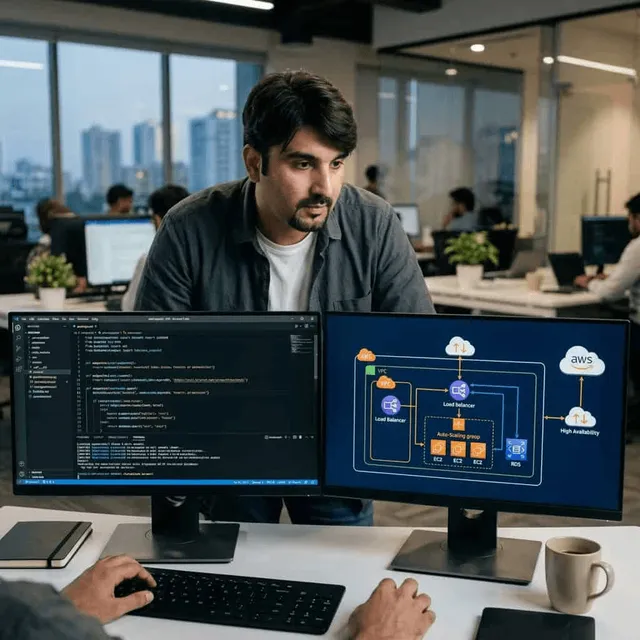
Global Edge & DNS WAF (Cloudflare) → Zero-JS Static & SSR Presentation (Astro / React / Tailwind) → Application & API Logic (Laravel / Node.js) → In-Memory Caching & Relational Store (Redis / PostgreSQL / MySQL) → Multi-Cloud Compute Infrastructure (AWS / GCP / Oracle) → Git CI/CD Automation (GitHub Actions / Docker).
“The ideal enterprise technology stack is not built by accumulating fashionable libraries, but by enforcing architectural discipline: explicit dependency isolation, stateless processes, configuration separation, and sub-second edge distribution.”— Goher K, Principal Solutions Architect at iGoher
Architectural Rigor
Hype-Driven Framework Churn vs. Battle-Tested Enterprise Architecture
See the practical engineering difference between chasing fleeting library trends and deploying hardened, long-term software stacks.
| Engineering Dimension | Hype-Driven StacksExperimental libraries & heavy bloat | iGoher Enterprise ArchitectureBattle-tested & LTS-backed runtimesRecommended |
|---|---|---|
| Frontend Delivery StandardClient hydration overhead | Monolithic client-side SPAs sending 3MB+ of JavaScript before initial paint | Astro Islands Architecture shipping pure HTML with sub-500ms First Contentful Paint |
| Backend & Data IntegrityBusiness logic structure | Disjointed serverless scripts with untyped schemas and data inconsistency | Structured Laravel & Node.js backends with strict typing, queues & ACID transactions |
| Caching & Database ScalabilityQuery throughput under load | Direct relational queries without caching, crashing under traffic surges | Multi-tier Redis in-memory caching reducing database CPU utilization by up to 80% |
| Cloud Infrastructure & PortabilityVendor lock-in risk | Tightly coupled proprietary cloud services with escalating monthly bills | Docker containerization deployable across AWS, GCP, or Oracle Cloud with zero lock-in |
| Code Maintainability & LifespanLong-term support horizon | Abandoned community packages requiring major rewrites every 18 months | LTS-backed frameworks (Laravel, PostgreSQL, Linux) supporting 5+ year lifespans |
| Core Web Vitals & Search IndexingSearch bot and user experience | 40–60 PageSpeed scores, slow mobile rendering, and incomplete bot crawling | 100/100 Core Web Vitals, zero layout shifts, and immediate search bot indexation |
Disciplined Selection
The 4-Phase Technology Selection Process
Every system architecture follows a structured evaluation sequence to ensure runtime suitability, cost efficiency, and multi-year operational reliability.
- 1
Phase 1: Workload Profiling & Latency Constraints
We evaluate expected concurrent request volumes, read-versus-write database transaction ratios, latency budgets, and regulatory data residency compliance before selecting software dependencies.
- 2
Phase 2: Runtime Selection & Architectural Decoupling
We assign specialized tools to their optimal architectural roles: Astro for static presentation, Laravel for transactional business logic, Flutter for cross-platform mobile, and Redis for in-memory session speed.
- 3
Phase 3: Infrastructure-as-Code & CI/CD Pipeline Build
We containerize applications using Docker, provision cloud resources through automated deployment scripts, and establish GitHub Actions pipelines with automated linting, test suites, and atomic rollbacks.
- 4
Phase 4: Edge Caching, Uptime Telemetry & Observability
We configure Cloudflare edge routing, tune database query indexes, establish real-time server health metrics, and guarantee 99.99% availability through structured monitoring and disaster recovery protocols.
Core Technology Pillars
Comprehensive Technology Stack Directory
Explore our twelve core cloud engines, backend languages, database stores, frontend runtimes, and DevOps platforms.
Google Cloud Platform (GCP)
Enterprise cloud hosting, BigQuery data pipelines, Kubernetes engine, and AI model orchestration.
Amazon Web Services (AWS)
Scalable cloud infrastructure, EC2 compute clusters, S3 asset storage, and serverless Lambda functions.
Oracle Cloud Infrastructure (OCI)
High-performance bare-metal compute instances, enterprise database systems, and cost-efficient cloud workloads.
PHP & Modern Laravel
Enterprise MVC backend architecture, Filament admin panels, high-throughput queues, and secure RESTful APIs.
Node.js & Real-Time Runtimes
Event-driven backend services, asynchronous webhook ingestion, WebSocket gateways, and high-concurrency APIs.
Databases & In-Memory Redis
Relational PostgreSQL and MySQL architectures coupled with persistent Redis object caching for sub-millisecond data retrieval.
Astro Islands Architecture
Zero-JS static site generation delivering sub-500ms First Contentful Paint times and 100/100 Core Web Vitals.
Dart & Flutter Cross-Platform
Production-ready iOS and Android applications engineered with clean BLoC architecture and offline-first data sync.
Tailwind CSS Design Systems
Zero-runtime utility CSS frameworks enforcing consistent typography tokens and eliminating layout shift (CLS).
Cloudflare Edge & Security
Global CDN caching, sub-10ms serverless Workers, automated SSL termination, and web application firewall (WAF) defense.
Git Version Control & GitHub
Enterprise repository governance, automated GitHub Actions CI/CD pipelines, and pull-request review controls.
DevOps & Systems Engineering
Docker containerization, automated Linux server configuration, zero-downtime releases, and uptime monitoring SLAs.
Architectural Tier Matrix
Enterprise Technology Stack Layers
How our selected technologies integrate systematically across each distinct tier of the modern software engineering lifecycle.
Tier 1: Global Edge & CDN Layer
Cloudflare Workers, global Anycast DNS, SSL termination, and web application firewalls routing requests in under 10ms.
Tier 2: High-Speed Presentation Tier
Astro, React, and Tailwind CSS compiling zero-JS static HTML and interactive islands for perfect Core Web Vitals.
Tier 3: Backend & Business Logic
Laravel 11, PHP 8.3, and Node.js executing transactional domain logic, background queues, and secure API gateways.
Tier 4: Relational & In-Memory Data
PostgreSQL, MySQL, and Redis delivering low-latency structured storage, complex relational joins, and RAM caching.
Tier 5: Cross-Platform Client Apps
Flutter and Dart compiling directly to native ARM machine code for fluid iOS and Android mobile app experiences.
Tier 6: DevOps, Cloud & CI/CD
Docker, GitHub Actions, AWS, GCP, and Oracle Cloud automating code testing, container orchestration, and zero-downtime releases.
Core Architecture Glossary
Systems Architecture Glossary & Technical Concepts
Authoritative definitions of enterprise runtime models, edge caching protocols, and system design standards.
- Twelve-Factor App Methodology
- A standardized architectural methodology for building software-as-a-service applications emphasizing declarative setup, explicit dependency isolation, stateless processes, and environment parity.
- Zero-JS Islands Architecture
- A web architecture pioneered by Astro that renders pure semantic HTML by default and hydrates JavaScript strictly on isolated, interactive component islands, optimizing Core Web Vitals and battery life.
- Redis In-Memory Caching
- An open-source, in-memory data structure store used as a database, cache, and message broker that resolves queries in sub-milliseconds directly from RAM, protecting relational databases from overload.
- Infrastructure as Code (IaC)
- The practice of managing and provisioning computing infrastructure through machine-readable definition files and scripts rather than manual interactive hardware configuration, ensuring repeatable deployments.
- Content Delivery Network (CDN) & Edge
- A geographically distributed network of proxy servers that cache assets and execute lightweight serverless functions in close physical proximity to users, minimizing network latency and packet loss.
- Continuous Integration & Deployment (CI/CD)
- An automated software engineering pipeline that validates code changes via automated syntax checks and test suites before deploying artifact containers to production servers without human error.
Direct Technical Answers
Frequently Asked Questions
Clear answers to common questions about our enterprise technology choices, framework lifecycles, and architecture advisory.
How do you determine the appropriate technology stack for an enterprise client?
We evaluate technology choices through strict empirical requirements: anticipated concurrent request traffic, read/write database ratio, operational budget, and team maintainability. We reject trend-driven framework churn in favor of proven, LTS-backed architectures (such as Laravel for transactional backends and Astro for content-heavy frontends) that minimize operational overhead and prevent future rewrites.
Why do you prioritize Astro and static edge architectures over monolithic JavaScript SPAs?
Heavy single-page applications (SPAs) bundle megabytes of client-side JavaScript, which stalls mobile browser rendering, increases Interaction to Next Paint (INP) latency, and hinders search engine bot indexing. Astro Islands Architecture ships pure semantic HTML with zero hydration overhead by default, activating JavaScript strictly when required for interactive components.
How do you handle multi-cloud deployments across AWS, Google Cloud, and Oracle Cloud?
We architect infrastructure using decoupled, cloud-agnostic design principles. Compute workloads are containerized via Docker and provisioned through automated scripts, allowing database, storage, and worker tiers to operate across AWS, GCP, or Oracle Cloud with uniform networking, automated offsite backups, and zero provider lock-in.
Can you modernize legacy codebases without interrupting active production operations?
Yes. We execute incremental modernization using the Strangler Fig architectural pattern. Instead of risky high-cost ground-up rewrites, we place Cloudflare edge proxies in front of your legacy system, progressively routing specific traffic routes and API endpoints to modern high-performance microservices until the legacy system is retired without downtime.
How do Redis and server-side object caching accelerate database performance?
Relational databases (MySQL, PostgreSQL) spend valuable compute resources re-parsing repeated complex queries. By introducing Redis in-memory key-value stores, frequently accessed datasets and user sessions resolve in sub-milliseconds directly from RAM, reducing database CPU load by up to 80% during peak traffic spikes.
How do you ensure Flutter mobile apps maintain native iOS and Android performance?
Flutter compiles directly to native ARM machine code rather than running through JavaScript bridges. We implement strict BLoC (Business Logic Component) state separation, enforce constant widget instantiation, and optimize memory caches, delivering steady 60fps and 120fps animations across both mobile operating systems.
What CI/CD and deployment automation standards do you implement?
Every project runs through automated GitHub Actions pipelines. Each code commit triggers static syntax analysis, automated unit tests, and security dependency audits before deploying atomically to isolated staging environments for verification and zero-downtime production rollouts.
Who owns the intellectual property and code repositories created during engagements?
The client retains 100% full ownership of all source code, database schemas, deployment scripts, and configuration blueprints. All repositories are hosted directly in your company organization accounts with zero proprietary licensing encumbrances.
Let’s Connect
Need Architecture Advisory on Your Technology Stack?
Schedule a direct technical consultation with our principal solutions architect. Share your current system architecture and scaling bottlenecks below to review your technology roadmap and implementation options.