
Enterprise GCP Architecture & Cloud Engineering
Google Cloud Platform GCP Architecture Consulting & Cloud Engineering
I architect, automate, and secure mission-critical infrastructure on Google Cloud Platform: from container orchestration with GKE Autopilot and serverless microservices on Cloud Run, to real-time BigQuery data pipelines and Zero-Trust BeyondCorp security.
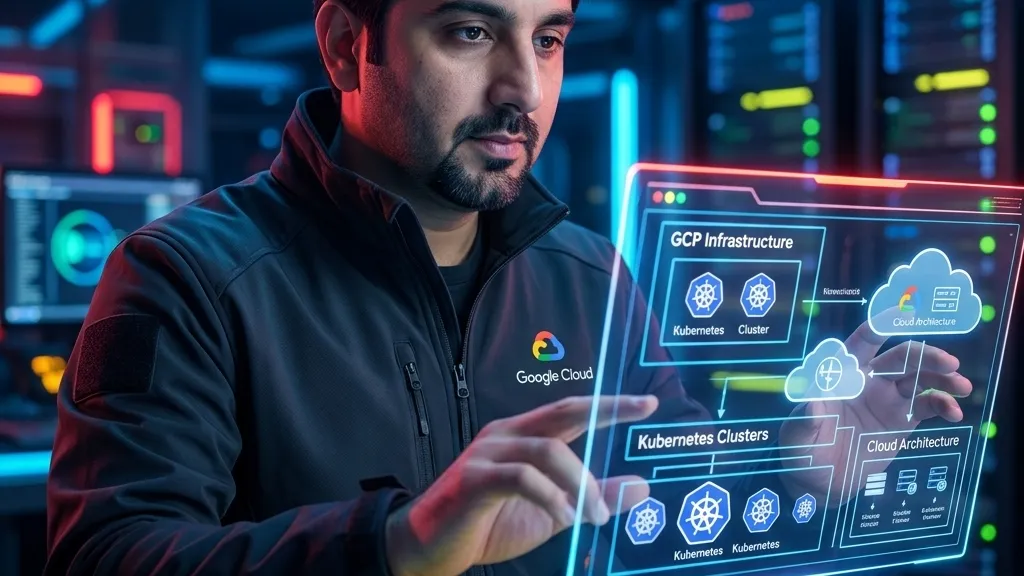
What Is Google Cloud Platform (GCP) Architecture Consulting?
Google Cloud Platform (GCP) Architecture Consulting is an enterprise systems discipline that plans, provisions, and hardens mission-critical cloud environments on Google's private software-defined infrastructure. It unifies serverless container runtimes (Cloud Run, GKE Autopilot), declarative Terraform IaC, distributed data warehouses (BigQuery), and BeyondCorp Zero-Trust security to achieve 99.999% SLA availability without operational overhead.
Production GCP Infrastructure Standards & Metrics
Enterprise platforms engineered on Google's private software-defined global fiber network, automated with Terraform, and secured with Zero-Trust.
Critical GCP Architectural Challenges & Vulnerability Traps
Four systemic infrastructure failure points that trigger security breaches, operational outages, and budget overruns if unaddressed.
Static Service Account Key Leaks
Exporting permanent JSON credentials for CI/CD runners or external systems exposes organizations to total account takeovers. I enforce Workload Identity Federation, eliminating static keys through short-lived cryptographic OIDC exchange.
Runaway BigQuery Query Ingestion Bills
Unpartitioned petabyte scans and unconstrained analytical queries can exhaust monthly budgets within hours. I architect partitioned and clustered tables, query byte limits, and BI Engine caching to lock in cost controls.
ClickOps & Configuration Drift Outages
Manual adjustments inside the Google Cloud Console create undocumented dependencies and broken production deployments. I enforce 100% Terraform Infrastructure as Code, making all environments auditable and reproducible.
Cross-Region Network Egress Surcharges
Routing high-volume data streams across regions or unoptimized internet routes creates severe egress fee compounding. I design regional service topologies, Private Google Access, and Cloud CDN caching to protect margins.
Engineered Architecture: Production Topology & Security Perimeter
Technical Blueprint
Disciplined Cloud Engineering Over Ad-Hoc Deployments
As a senior solutions architect with over 20 years of hands-on software and infrastructure experience, I do not treat Google Cloud as generic virtual hosting. I design cloud-native systems that power your application logic, scale automatically under traffic spikes, and eliminate operational overhead.
# Production Traffic & Security Ingress Flow
[Client Ingress] → (Google Edge Anycast PoP / Cloud Armor WAF)
→ [Global External Application Load Balancer / Cloud CDN]
→ [Private Shared VPC Network with Service Peering]
• Compute Tier: GKE Autopilot Pods & Cloud Run Microservices
• Data Tier: Cloud SQL HA / Spanner / AlloyDB (Private IPs)
• Analytics Tier: Pub/Sub → Dataflow → Partitioned BigQuery
→ [IAM Perimeter]: Workload Identity Federation (Zero Static Keys)
Anycast Global Edge Ingress & WAF
Client traffic terminates at the nearest Google edge Point of Presence (PoP) across Anycast IPs, inspected by Cloud Armor WAF rules to defeat DDoS and OWASP exploits before hitting compute clusters.
Workload Identity & Zero Static Keys
GKE pods and GitHub Actions runners obtain short-lived IAM credentials dynamically via OpenID Connect (OIDC) metadata tokens. Zero static service account keys reside in repositories or secrets managers.
Private Service Networking & VPC Controls
Cloud SQL, AlloyDB, and Memorystore Redis instances operate strictly on non-routable private IP subnets. VPC Service Controls enforce perimeter security around Cloud Storage and BigQuery datasets.
FinOps Guardrails & Automated Governance
Continuous cost governance with Committed Use Discounts (CUDs), automated object lifecycle archiving in GCS, and custom billing alert budgets integrated directly with alerting webhooks.
Authoritative Architecture Framework
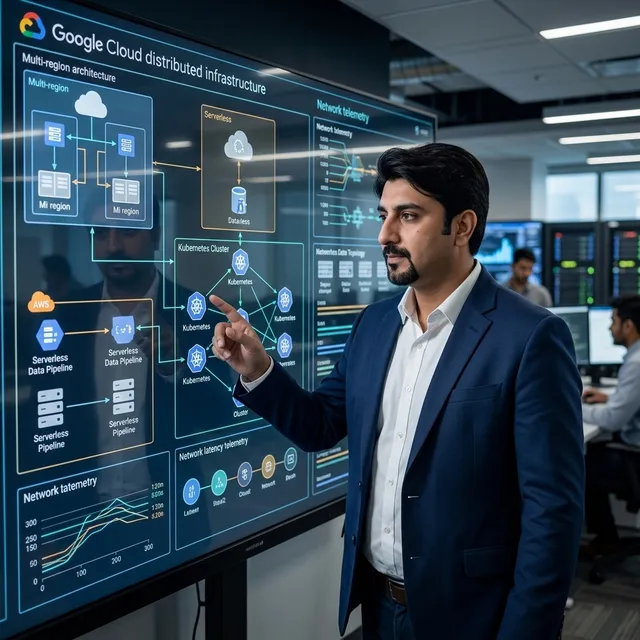
“The Google Cloud Architecture Framework provides recommendations and describes best practices to help cloud architects, developers, and administrators design and operate a cloud topology that is secure, efficient, resilient, high-performing, and cost-effective.”
Every architecture engagement I lead directly aligns with Google's Well-Architected Framework: operational excellence through modular Terraform automation, built-in security via BeyondCorp, and financial efficiency using continuous FinOps monitoring.
Enterprise Operating Model: Fragile ClickOps vs Engineered Cloud
Comparing ad-hoc console administration against automated, Terraform-governed Google Cloud engineering.
| Architectural Dimension | Engineered GCP Architecture (iGoher Standard) | Unmanaged ClickOps Administration | Generic Shared Multi-Tenant Cloud |
|---|---|---|---|
| Provisioning & State Management | 100% Terraform/OpenTofu IaC modules with state locking in encrypted GCS buckets. | Manual web console button-clicking; undocumented configurations and irreversible drift. | Proprietary control panels with zero Git integration or reproducible blueprints. |
| Security & Credentials | Workload Identity Federation; short-lived OIDC tokens and zero static JSON secrets. | Permanent service account JSON keys saved locally on developer laptops. | Shared root passwords and static API keys without access expiration. |
| Compute Autoscaling & Runtime | GKE Autopilot and Cloud Run with gVisor sandboxing; instant scale-to-zero capability. | Oversized static Compute Engine VMs running 24/7 with zero traffic-based scaling. | Fixed VPS slices with rigid CPU limits and noisy neighbor resource contention. |
| Database High Availability & Recovery | Multi-zone Cloud SQL/Spanner with automated failover and continuous point-in-time recovery. | Single-zone database instances without automated replication or verified backups. | Shared MySQL instances with nightly dump scripts and hours of data loss exposure. |
| Cost Governance & FinOps | Partitioned BigQuery tables, BI Engine caching, CUD commitments, and budget alerts. | Uncontrolled queries scanning full datasets, leading to thousand-dollar invoice shocks. | Opaque billing bundles with hidden bandwidth surcharges and high exit penalties. |
| Ingress Routing & DDoS Protection | Global External Load Balancers with Cloud Armor WAF, HTTP/3, and edge Anycast routing. | Direct public IP exposure on VMs with basic host firewalls and no DDoS filtering. | Basic reverse proxies without edge caching or Layer 7 application inspection. |
Implementation Lifecycle
Structured 4-Phase Cloud Engineering Delivery Process
A predictable, phased delivery roadmap transforming legacy infrastructure into automated, enterprise-grade Google Cloud topologies.
- Phase 01
Discovery & Security Audit
Examine existing workloads, IAM permissions, network routing, and monthly billing to establish baseline benchmarks and identify credential risks.
Duration: Week 1
- Phase 02
Terraform IaC & VPC Foundation
Author modular Terraform modules establishing Organization resource hierarchies, Shared VPC networks, firewall rules, and Cloud Armor security policies.
Duration: Weeks 2–3
- Phase 03
Container & Data Migration
Deploy applications to Cloud Run or GKE Autopilot, establish CI/CD pipelines with Workload Identity Federation, and execute dual-write database replication.
Duration: Weeks 4–5
- Phase 04
Production Cutover & FinOps
Shift DNS traffic incrementally via Anycast load balancers, verify observability dashboards, purchase CUD discounts, and deliver full team documentation.
Duration: Week 6
Core GCP Services I Engineer for Client Workloads
Authoritative implementation of Google Cloud's foundational compute, storage, networking, and security engines.
Google Kubernetes Engine (GKE)
Hardened, enterprise-grade Kubernetes. I configure GKE Autopilot clusters with automated node provisioning, vulnerability scanning, self-healing node pools, and SLA-backed multi-cluster fleet management.
Serverless Cloud Run
Fully managed container runtime for web apps, microservices, and WebSockets. I deploy container images sandboxed with gVisor security, automatic scale-to-zero, and per-request billing with zero server patching.
Compute Engine (GCE)
High-performance virtual machines spanning General-purpose (N2, C3), Memory-optimized, and GPU families. Benefits from Google's automated Live Migration, performing host maintenance with zero VM downtime.
Cloud Spanner & AlloyDB
Enterprise database engines for mission-critical scale. Cloud Spanner delivers global 99.999% SLA horizontal ACID scaling; AlloyDB delivers up to 4x faster transaction processing for PostgreSQL workloads.
BigQuery Modern Analytics
Serverless data warehousing powered by Dremel execution and Capacitor columnar storage. I build optimized schemas with partitioning, clustering, and integrated ML models to process petabytes in seconds.
Pub/Sub & Cloud Dataflow
Global event streaming and stream processing. Pub/Sub delivers low-latency message queues, while Dataflow executes unified stream/batch pipelines with exactly-once processing guarantees.
Global External Load Balancers
Anycast proxy load balancing terminating client TLS at Google's edge PoP. Delivers single global Anycast IP routing, HTTP/3 (QUIC), automated SSL certificate management, and cross-region failover.
Cloud Armor (WAF & DDoS)
Enterprise web application firewall protecting services against Layer 3, 4, and 7 DDoS attacks, OWASP Top 10 vulnerabilities, and malicious automated scrapers using Google's global infrastructure threat intelligence.
BeyondCorp & IAM Federation
Context-aware Zero-Trust security framework. I implement Identity-Aware Proxy (IAP) to protect admin dashboards without VPNs, paired with Workload Identity Federation and VPC Service Controls.
Google Cloud Production Stack Architecture Matrix
A comprehensive overview of the technological layers and components engineered in every enterprise GCP deployment.
Compute & Runtimes
GKE Autopilot, Cloud Run, Compute Engine (N2/C3/C3D), Cloud Functions 2nd Gen, and Google Artifact Registry.
Data & Storage
Cloud Spanner, AlloyDB for PostgreSQL, Cloud SQL, Memorystore Redis, Google Cloud Storage, and Bigtable.
Networking & Edge
Global External Application Load Balancers, Cloud Armor WAF, Cloud CDN, Cloud DNS, Cloud NAT, and Shared VPC.
Analytics & AI
BigQuery BI Engine, Cloud Pub/Sub, Cloud Dataflow (Apache Beam), Dataproc, and Vertex AI Model Endpoints.
Security & Identity
Workload Identity Federation, Identity-Aware Proxy (IAP), VPC Service Controls, Secret Manager, and KMS.
DevOps & Observability
HashiCorp Terraform, Cloud Build, Cloud Monitoring, Cloud Logging, OpenTelemetry tracing, and FinOps Recommenders.
Architectural Glossary
Core Technical Definitions & Concepts
Authoritative definitions of fundamental Google Cloud mechanisms, networking layers, and security constructs.
- GKE Autopilot
- GKE Autopilot is defined as an automated operational mode of Google Kubernetes Engine where Google manages the underlying compute nodes, autoscaling, OS security patching, and cluster architecture, billing customers strictly for requested Pod compute resources.
- Cloud Run
- Cloud Run is defined as a fully managed serverless platform that directly runs OCI container images on Google's scalable infrastructure, sandboxed using gVisor technology, supporting automatic scale-to-zero, concurrency multiplexing, and pay-per-use billing.
- BigQuery Dremel Engine
- The BigQuery Dremel Engine is defined as Google's massively parallel execution engine that runs interactive SQL queries against petabyte-scale datasets by dispatching dynamic aggregation trees across thousands of distributed compute slots in seconds.
- TrueTime API
- The TrueTime API is defined as Google's hardware-synchronized time service that leverages GPS receivers and atomic rubidium clocks in every data center to represent absolute time as an uncertainty interval [earliest, latest], enabling globally serializable distributed ACID transactions in Cloud Spanner.
- Workload Identity Federation
- Workload Identity Federation is defined as an identity bridging mechanism that enables external software workloads (such as GitHub Actions or Kubernetes pods) to exchange OpenID Connect (OIDC) or SAML assertions for short-lived Google Cloud IAM access tokens, eliminating permanent service account keys.
- VPC Service Controls
- VPC Service Controls is defined as a Google Cloud security capability that enforces logical network perimeters around managed APIs and resources (like Cloud Storage and BigQuery), blocking data export or exfiltration outside authorized networks regardless of IAM privileges.
Complementary Technologies & Service Ecosystem
Explore related technologies and consulting practices across my technical architecture portfolio.
Enterprise IT Consultancy Services
End-to-end cloud architecture design, legacy migration blueprints, security audits, and infrastructure reviews.
High-Concurrency Laravel Backends
Enterprise Laravel backend systems, asynchronous queue workers, and Filament admin systems deployed on GCP infrastructure.
Modern Web Development
Lightning-fast digital frontends built with Astro and React, optimized with Google Cloud CDN and sub-30ms global TTFB.
AI Agents & Automation
Autonomous multi-agent workflows, vector databases, and enterprise LLM integrations leveraging Vertex AI and Gemini.
Cross-Platform Mobile Apps
Scalable Flutter mobile app backends on Cloud Run with high-frequency database replication and push messaging.
Amazon AWS Cloud Architecture
Multi-cloud elasticity, AWS EC2, S3, RDS, Lambda serverless microservices, and hybrid cloud integration.
Authoritative References & Documentation
- Google Cloud Architecture Center — Official reference architectures and frameworks.
- Google Kubernetes Engine (GKE) Docs — Cluster management, Autopilot, and security hardening.
- Cloud Run Technical Documentation — Serverless container execution and concurrency specifications.
- BigQuery Documentation — Columnar storage and Dremel parallel execution engine.
Architectural Guidance
Frequently Asked Questions on Google Cloud Architecture
Direct answers to critical engineering, deployment, and cost questions from enterprise leaders and CTOs.
How do I help clients choose between Cloud Run and GKE Autopilot?
During my architecture consultations, I recommend Cloud Run for stateless web applications, microservices, WebSockets, and API backends that benefit from instant scale-to-zero, rapid cold starts, and zero node management. Cloud Run runs standard OCI containers securely sandboxed by gVisor. I deploy GKE Autopilot when clients require complex Kubernetes primitives—such as stateful workloads, custom daemonsets, internal service meshes (Istio), multi-container co-scheduling, or non-HTTP protocols beyond standard TCP proxies.
How do I ensure database reliability and zero data loss on GCP?
For high-throughput transactional backends, I architect Cloud SQL (PostgreSQL/MySQL) with multi-zone automated failover, point-in-time recovery, and private IP peering inside a Shared VPC. For globally distributed enterprise systems requiring horizontal write scalability and 99.999% SLA availability, I implement Cloud Spanner, using Google's TrueTime atomic clock synchronization to guarantee serializable ACID transactions across regions without distributed locking delays.
How do I eliminate static service account keys in client deployments?
Static service account JSON keys pose severe credential leak risks. In all client pipelines, I enforce Workload Identity Federation for external CI/CD runners (like GitHub Actions and GitLab CI) and Workload Identity on GKE clusters. This architecture exchanges short-lived OIDC tokens for temporary GCP IAM credentials with least-privilege permissions, eliminating static secrets and hardcoded credentials entirely.
What networking setup do I implement for low latency and security?
I configure GCP Premium Tier networking by default, routing ingress traffic into Google's private global fiber network at the nearest edge Point of Presence (PoP). Traffic is terminated via a Global External Application Load Balancer with Cloud Armor WAF rules protecting against DDoS and OWASP Top 10 exploits, combined with Cloud CDN caching to deliver sub-30ms global latency.
How do I manage GCP infrastructure declaratively and maintain state?
I provision 100% of client cloud infrastructure using HashiCorp Terraform or OpenTofu. State files are encrypted in versioned Google Cloud Storage buckets with CMEK and state locking. Modular codebases separate networking (VPCs, subnets, firewall rules), IAM security, databases, and application compute, allowing reproducible deployments across dev, staging, and production environments.
How do I prevent runaway BigQuery query bills for data-heavy applications?
I implement strict FinOps guardrails: mandatory table partitioning by ingestion date or integer ranges, clustering by frequently filtered dimensions, query byte-billing caps in service configurations, and BigQuery BI Engine in-memory caching. For predictable corporate reporting, I help clients evaluate reservation slot commitments to stabilize monthly data warehouse costs.
How does Google Cloud integrate with my other engineering services?
GCP serves as the high-availability cloud backbone for my high-concurrency Laravel backend architectures, cross-platform mobile app APIs built with Flutter, reactive web frontends built with Astro, and custom AI agent workflows running on Vertex AI. Clients receive a unified, end-to-end architecture where application code and cloud infrastructure work together without friction.
What does a Google Cloud architecture engagement typically include?
Engagements include infrastructure discovery and cost audit, declarative Terraform code authoring, VPC and IAM Zero-Trust configuration, automated CI/CD pipeline setup via Workload Identity, container migration to Cloud Run or GKE, database migration with minimal downtime, observability calibration (Cloud Monitoring & Logging), and handover documentation with team training.
Let’s Connect
Ready to Architect Your Infrastructure on Google Cloud?
Schedule a direct technical consultation with an enterprise full-stack architect. Discuss your cloud migration, GKE cluster design, or infrastructure cost reduction with actionable delivery milestones.