
· Goher K · Mountaineering · 25 min read
Nirmal Purja (Nimsdai): The Gurkha Who Redefined 8000m Mountaineering
Explore Nirmal Purja’s historic 14 peaks in 6 months, winter K2 first ascent, Gurkha SBS roots, high-altitude rescues, and enduring fearless alpine legacy.
Nirmal "Nimsdai" Purja MBE (1983–2026) was a Nepali-British high-altitude mountaineer and decorated veteran of the British Brigade of Gurkhas and the elite Special Boat Service (SBS). He revolutionized modern alpinism by summiting all fourteen of the world's 8,000-meter peaks in 6 months and 6 days (189 days) during "Project Possible" in 2019, shattering the previous world record of nearly eight years. On January 16, 2021, he co-led the first winter ascent of K2 in history, standing on the summit without supplemental oxygen. Purja dedicated his career to elevating Nepali and Sherpa mountaineers to global leadership before tragically passing away in an avalanche on Broad Peak on July 30, 2026.
The Indomitable Spirit: Remembering Nirmal “Nimsdai” Purja
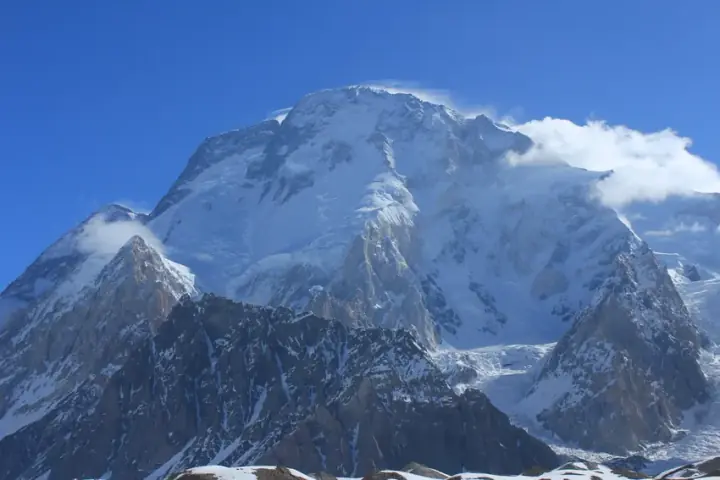
When you spend weeks navigating the serrated moraines of the Karakoram and standing beneath colossal pyramid peaks of ice, you realize very quickly that high-altitude mountaineering is not a contest against rock and snow. It is a ruthless mirror held up to the human spirit. Out in the death zone above 8,000 meters, where atmospheric pressure plummets to a third of sea-level density and a single misstep guarantees oblivion, mortal fear is the default state of consciousness.
Few men in modern human history have stared into that icy void with greater ferocity, audacious confidence, and profound brotherhood than Nirmal “Nimsdai” Purja MBE (25 July 1983 – 30 July 2026).
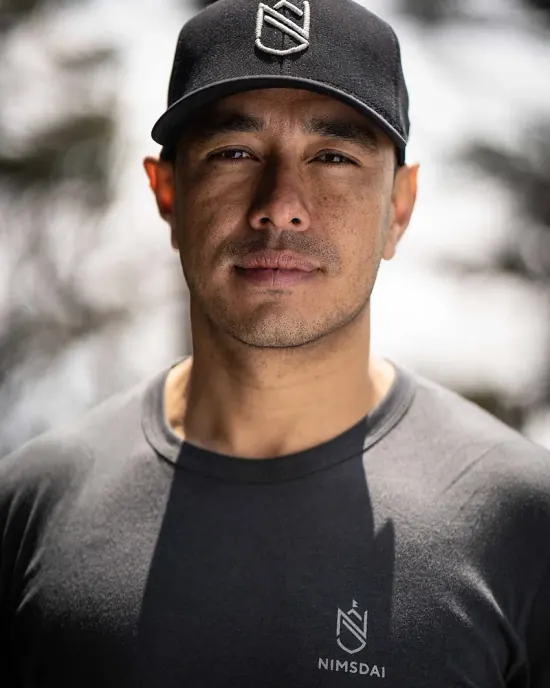
For those of us who live and breathe high-altitude expeditions, Nims was not merely a record-breaker; he was an unstoppable force of nature who completely demolished the conventional boundaries of human endurance. Before Nims burst onto the global mountaineering stage, climbing the world’s fourteen 8,000-meter peaks was considered a lifetime crusade—an agonizing quest that previously took legends like Jerzy Kukuczka and Kim Chang-ho nearly eight full years of sacrifice. Nims looked at that timeline, heard the global alpine establishment declare it impossible, and conquered all fourteen in six months and six days.
Yet, when the global climbing fraternity received the devastating news of July 30, 2026—that a catastrophic avalanche between Camp 2 and Camp 3 on Broad Peak had swept away Nimsdai alongside his fellow elite guides and clients—the grief shook the high valleys from Kathmandu to Skardu.
This chronicle is my deeply personal tribute and an exhaustive historical profile of a brother of the high ridges: an extraordinary warrior who rose from the foothills of Dhaulagiri, served in the elite British Special Boat Service, shattered every speed record in the death zone, led the historic first winter ascent of K2, and permanently elevated the dignity of Nepali climbers across the globe.
From the Dhaulagiri Foothills to the Special Boat Service (SBS)
Nirmal Purja was born on July 25, 1983, in the small village of Dana, nestled in the rugged Myagdi District of Nepal, framed by the towering massif of Dhaulagiri. Born into an indigenous Magar family of modest means, his father was a decorated Gurkha soldier and his mother managed the family home. In search of better schooling, his family relocated down to the plains of Chitwan.
Growing up, Nims did not dream of ice axes or crampons; his childhood ambition was identical to that of thousands of young Nepali boys: to wear the revered uniform of the Brigade of Gurkhas.
“Giving up is not in the blood, sir. It’s simply not in the blood.”
— Nirmal “Nimsdai” Purja
In 2003, at the age of eighteen, Nims conquered the infamously brutal Gurkha selection course in Pokhara—surviving the punishing “Doko race,” carrying 25 kilograms of river stones up steep Himalayan ridges for five kilometers. He was inducted into the Royal Gurkha Rifles, where his discipline, physical motor, and cold-weather resilience immediately marked him as an exceptional soldier.
       [ 1983: Born in Dana, Myagdi, Nepal ]
                         │
       [ 2003: Selected into Brigade of Gurkhas ]
                         │
       [ 2009: First Gurkha to Pass UK SBS Selection ]
                         │
       [ 2012: First Himalayan Climb: Lobuche East (6,119m) ]
                         │
       [ 2018: Awarded MBE by Queen Elizabeth II ]
                         │
       [ 2019: Project Possible 14/7: 14 Peaks in 189 Days ]
                         │
       [ 2021: First Historic Winter Ascent of K2 (8,611m) ]
                         │
       [ 2026: Broad Peak Karakoram Avalanche (July 30) ]
In 2009, Nims achieved a historic military milestone: he became the first Gurkha soldier in history to pass the selection for the British Special Boat Service (SBS), the tier-one maritime special forces unit of the United Kingdom military.
Serving as a cold-weather warfare specialist and combat operator, Nims deployed on high-risk classified missions across the globe. The SBS instilled in him an unshakeable operational mindset: hyper-meticulous logistical planning, emotional calmness under extreme mortal peril, tactical speed, and an absolute commitment to leave no comrade behind. These exact military traits would later serve as the tactical backbone of his revolutionary high-altitude climbing campaigns.
His passion for extreme altitude was ignited relatively late in life. In 2012, during military leave, he trekked to Everest Base Camp and impulsively convinced a guide to let him climb Lobuche East (6,119m)—his first technical peak, which he summited with zero prior mountaineering background. In 2014, he summited his first 8,000-meter peak, Dhaulagiri (8,167m), followed by Mount Everest in 2016. In 2017, he led the Gurkha 200 Expedition to the summit of Everest to commemorate two centuries of Gurkha service.
In 2018, Queen Elizabeth II appointed him a Member of the Order of the British Empire (MBE) for his outstanding leadership in high-altitude cold-climate warfare and daring rescues on Mount Everest. Yet, despite having a secure, decorated military career and a lucrative pension within his grasp, Nims made a decision that shocked his commanders: he resigned from the SBS to chase a vision the world deemed suicidal.
The Birth of Project Possible 14/7: Audacity in the Death Zone
In early 2019, Nims unveiled “Project Possible 14/7”. His objective was breathtaking in its audacity: to stand on the summit of all fourteen of the world’s 8,000-meter peaks in less than seven months.
To put this ambition in historical context:
- Reinhold Messner became the first person to climb all 14 eight-thousanders in 1986, taking 16 years.
- Polish alpine powerhouse Jerzy Kukuczka set the baseline benchmark in 1987, completing the feat in 7 years, 11 months, and 14 days.
- South Korea’s Kim Chang-ho broke the speed record in 2013, clocking 7 years, 10 months, and 6 days.
When Nims announced his intention to compress eight years of mortal high-altitude labor into seven months, the international mountaineering establishment mocked him. Commercial sponsors closed their doors. Critics labeled him a reckless self-promoter courting disaster.
Undeterred, Nims took the ultimate gamble: he re-mortgaged his family home in Hampshire, poured his life savings into the project, and launched a crowdfunding campaign. For Nims, this was never about personal vanity. It was a profound cultural mission:
- Demonstrating Human Capability: Proving that the psychological limits humans impose on themselves are largely self-constructed illusions.
- Elevating Nepali Mountaineers: For over a century, western climbing literature relegated Sherpa and Nepali climbers to anonymous footnotes—nameless porters carrying heavy gear while western clients claimed the glory. Nims formed an all-Nepali team of elite mountaineers—including Mingma David Sherpa, Geljen Sherpa, Lakpa Dendi Sherpa, and Gesman Tamang—to prove that Nepali mountaineers are the undisputed masters of the high Himalaya.
Phase 1 (Nepal): Six Giants in Thirty-One Days
On April 23, 2019, Project Possible launched on the treacherous slopes of Annapurna I (8,091m)—statistically one of the deadliest mountains on earth. Nims and his team fixed lines, pushed through catastrophic avalanche terrain, and reached the summit.
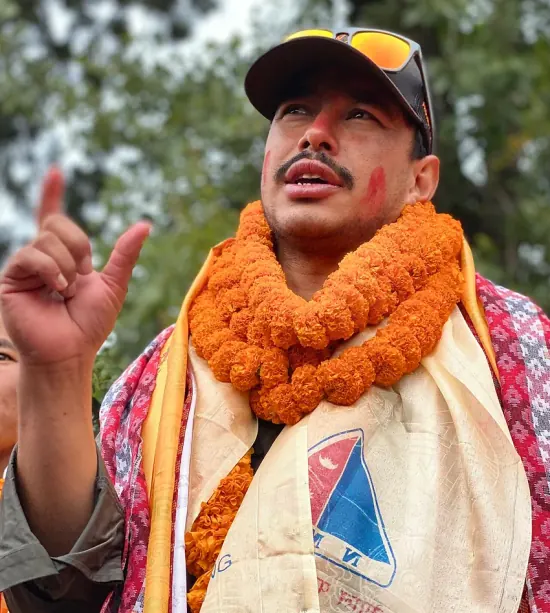
Just hours after descending from the apex of Annapurna, word arrived that Malaysian climber Dr. Chin Wui Kin was stranded alone near 7,500m, having fallen behind his commercial expedition. While other teams stayed in base camp, Nims assembled his Sherpa brothers, chartered an emergency helicopter drop to Camp 3, and led a daring high-altitude rescue that brought Dr. Chin down alive—a feat that earned international praise and validated the SBS rescue ethos at the core of his team.
Without pausing to rest, Nims swept across the remaining giants of Nepal with blistering velocity:
- Dhaulagiri (8,167m): Summited on May 12 in the teeth of a howling 60-knot gale.
- Kanchenjunga (8,586m): Summited on May 15. During the harrowing descent from the third-highest peak on Earth, Nims and his team encountered two Indian climbers who had run out of supplemental oxygen at 8,400 meters. Demonstrating extraordinary altruism, Nims surrendered his own team’s emergency oxygen bottles to keep the climbers alive while radioing desperately for support from base camp.
- The 48-Hour Triple Crown (Everest, Lhotse, Makalu):
- On May 22 at 05:30 AM, Nims stood atop Mount Everest (8,848m). While descending the knife-edge ridge at the Hillary Step, he snapped the iconic photograph of hundreds of climbers trapped in a massive bottleneck queue—a single image that went viral worldwide and triggered a global debate on Everest commercial regulation.
- Reaching the South Col, Nims immediately pivoted, traversed across to Lhotse (8,516m), and summited that very afternoon at 15:45 PM—shattering the Everest-Lhotse speed record in just 10 hours and 15 minutes.
- Flying straight to the foot of Makalu (8,485m), he pushed non-stop through exhaustion and summited on May 24.
In just 31 days, Phase 1 was complete: six 8,000-meter peaks conquered, two high-altitude rescues conducted, and three world records shattered.
Phase 2 (Pakistan): Conquering the Savage Karakoram
In July 2019, Nims shifted operations to the rugged, remote Karakoram range of northern Pakistan. Here, logistical helicopters are scarce, weather windows are razor-thin, and the objective hazards are immense.
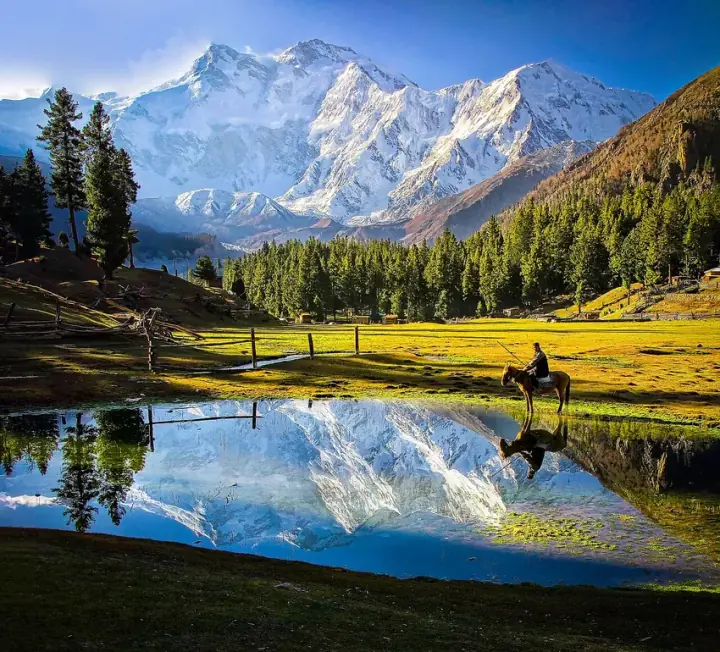
- Nanga Parbat (8,126m): Known as the “Killer Mountain,” Nims and his team assaulted the towering Diamir Face, summiting on July 3, 2019 after 48 hours of relentless climbing.
- Gasherbrum I (8,080m) & Gasherbrum II (8,034m): He summited Gasherbrum I on July 15 and Gasherbrum II on July 18, completing the grueling traverse with virtually no acclimatization pause.
- The K2 Bottleneck Miracle (8,611m): Arriving at K2 Base Camp in late July, Nims found a demoralized climbing community. Heavy winter snowpack, hanging serac collapses, and continuous rockfall had forced dozens of experienced international commercial teams to abandon their expeditions. The mountain was declared unclimbable for the 2019 season.
Nims gathered his core Sherpa brothers and delivered an impassioned tactical briefing. On July 24, 2019, Nims, Mingma David, Geljen, and Lakpa Dendi stepped into the frozen shooting gallery of the Bottleneck—a 100-meter couloir under a hanging wall of glacial ice at 8,200m. Operating with military efficiency, they fixed the ropes, hammered the snow pickets, and forged a viable line to the 8,611m summit. In doing so, Nims not only summited the “Savage Mountain” himself, but unlocked the route for more than twenty other waiting climbers.
- Broad Peak (8,051m): Just 48 hours after descending K2, Nims marched up the Godwin-Austen glacier and stood atop Broad Peak on July 26.
Five Karakoram 8,000ers in 23 days. The mountaineering world had never witnessed a high-altitude campaign of this speed and ferocity.
Phase 3 (Tibet & China): Diplomacy, Cho Oyu, and Shishapangma
The third and final phase presented a massive bureaucratic crisis. While Nims summited Cho Oyu (8,188m) on September 23 and Manaslu (8,163m) on September 27, his 14th and final peak—Shishapangma (8,027m) in Tibet—was completely closed by the Chinese government due to severe avalanche safety concerns.
Without a special climbing permit from Beijing, Project Possible would collapse at the final hurdle.
What followed was an unprecedented international diplomatic effort. The Government of Nepal, the British Foreign Office, and an overwhelming global petition from the worldwide climbing community appealed directly to Chinese authorities. Recognizing the historic nature of the human endeavor, the Chinese government granted Nims and his team a special, exclusive climbing permit.
On October 29, 2019, at 08:58 AM, Nirmal Purja, Mingma David Sherpa, Gesman Tamang, and Gyalzen Sherpa stood on the summit of Shishapangma.
The Final Metric: All fourteen 8,000-meter peaks completed in 189 days (6 months and 6 days). The previous record of nearly eight years was obliterated. Human possibility had been permanently rewritten.
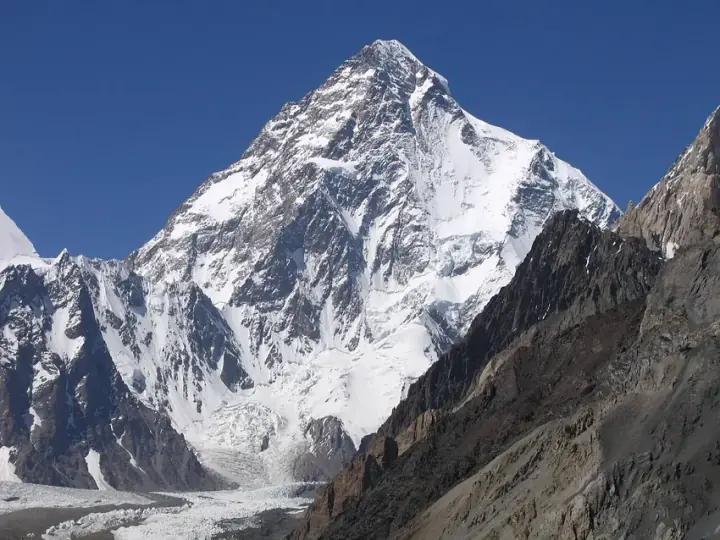
The Impossible Winter: K2 First Winter Ascent (January 16, 2021)
While Project Possible made Nims an international icon, his most defining technical triumph occurred in the dead of winter in the Karakoram.
Among high-altitude alpinists, the winter ascent of K2 was regarded as the final, holy grail of mountaineering. Thirteen of the fourteen eight-thousanders had been conquered in winter—mostly by legendary Polish “Ice Warriors.” K2 alone remained undefeated. With hurricane-force jet stream winds exceeding 120 km/h, temperatures dropping to -65°C, and black ice as hard as steel, more than half a dozen winter expeditions had failed over three decades.
In December 2020, Nims arrived at K2 Base Camp with his team. Simultaneously, another elite Nepali team led by Mingma Gyalje Sherpa (Mingma G) was attempting the mountain. Rather than competing against one another, Nims and Mingma G made a historic, patriotic pact: they merged their expeditions into a unified ten-man Nepali force.
Ten Nepali Mountaineers on K2 Winter Summit (16 Jan 2021):
---------------------------------------------------------
1. Nirmal Purja MBE (Team Leader, No Supplemental O2)
2. Mingma Gyalje Sherpa (Mingma G)
3. Mingma David Sherpa
4. Geljen Sherpa
5. Mingma Tenzi Sherpa
6. Dawa Temba Sherpa
7. Pem Chhiri Sherpa
8. Kilu Pemba Sherpa
9. Dawa Tenjing Sherpa
10. Sona Sherpa
On January 16, 2021, battling sub-zero exhaustion that numbed fingers and froze corneas, the ten men negotiated the treacherous Bottleneck.
Just ten meters below the 8,611m apex, they paused. In an unforgettable display of brotherhood and national pride, they waited for the rearmost climber to catch up. Linking arms shoulder-to-shoulder, the ten Nepali mountaineers stepped onto the summit together, singing Nepal’s national anthem—Sayaun Thunga Phool Ka—into the freezing Karakoram wind.
Following their safe return to base camp, Nims revealed a mind-boggling detail: he had completed the first winter ascent of K2 entirely without supplemental oxygen. It was a physical and psychological triumph that cemented his status among the greatest mountaineers in history.
Verified Chronological Expedition Ledger
The following ledger details Nirmal Purja’s historic 14-peak speed campaign alongside his groundbreaking winter ascent:
| Peak Name | Elevation | Mountain Range | Summit Date | Phase / Milestone | Notes & Rescues |
|---|---|---|---|---|---|
| Annapurna I | 8,091 m | Annapurna Himalaya | 23 April 2019 | Phase 1 (Nepal) | Led rescue of Dr. Chin Wui Kin at 7,500m |
| Dhaulagiri | 8,167 m | Dhaulagiri Himalaya | 12 May 2019 | Phase 1 (Nepal) | Summited in 60-knot gale winds |
| Kanchenjunga | 8,586 m | Kanchenjunga Himalaya | 15 May 2019 | Phase 1 (Nepal) | Surrendered team oxygen to rescue Indian climbers |
| Mount Everest | 8,848 m | Mahalangur Himalaya | 22 May 2019 | Phase 1 (Nepal) | Captured viral Hillary Step queue photo |
| Lhotse | 8,516 m | Mahalangur Himalaya | 22 May 2019 | Phase 1 (Nepal) | Summited 10 hrs after Everest (Same Day) |
| Makalu | 8,485 m | Mahalangur Himalaya | 24 May 2019 | Phase 1 (Nepal) | Triple crown completed in 48 hours |
| Nanga Parbat | 8,126 m | Punjab Himalaya | 03 July 2019 | Phase 2 (Pakistan) | Diamir Face high-speed alpine assault |
| Gasherbrum I | 8,080 m | Baltoro Karakoram | 15 July 2019 | Phase 2 (Pakistan) | Hidden Peak rapid ascent |
| Gasherbrum II | 8,034 m | Baltoro Karakoram | 18 July 2019 | Phase 2 (Pakistan) | Continuous traverse from G-I |
| K2 | 8,611 m | Baltoro Karakoram | 24 July 2019 | Phase 2 (Pakistan) | Fixed Bottleneck ropes, opened season route |
| Broad Peak | 8,051 m | Baltoro Karakoram | 26 July 2019 | Phase 2 (Pakistan) | 5 Karakoram peaks in 23 days |
| Cho Oyu | 8,188 m | Mahalangur Himalaya | 23 Sept 2019 | Phase 3 (Tibet) | Rapid post-monsoon alpine push |
| Manaslu | 8,163 m | Mansiri Himalaya | 27 Sept 2019 | Phase 3 (Nepal) | High-speed traverse to true summit |
| Shishapangma | 8,027 m | Jugal Himalaya | 29 Oct 2019 | Phase 3 (Tibet) | Special Chinese permit; completed 14/7 in 189 days |
| K2 (Winter) | 8,611 m | Baltoro Karakoram | 16 Jan 2021 | Winter Masterpiece | First winter ascent in history (without O2) |
Beyond the Summit: Rewriting the Commercial and Cultural Narrative
Nimsdai’s impact on mountaineering extended far beyond stopwatches and altitude records. He catalyzed a tectonic shift in the economics and cultural hierarchy of the Himalayas.
1. Founding Elite Exped
Historically, Western commercial agencies charged clients between $60,000 and $100,000 for guided ascents of Everest and K2, while local Sherpa climbing guides received a tiny fraction of those fees despite doing the life-threatening work of fixing ropes and carrying critical supplies.
Nims co-founded Elite Exped alongside Mingma David Sherpa and Dakipa Sherpa. Elite Exped challenged Western dominance by offering superior safety standards, military precision, and elite high-altitude guiding while ensuring that Nepali mountaineers retained direct ownership, leadership, and fair compensation.
2. The 14 Peaks Documentary & Beyond Possible
In 2021, the release of the Netflix documentary 14 Peaks: Nothing Is Impossible—executive produced by Jimmy Chin and Elizabeth Chai Vasarhelyi—thrust Nims and his Sherpa brothers into global pop-culture prominence. His bestselling autobiography, Beyond Possible: One Soldier, Fourteen Peaks — My Life in the Death Zone, detailed the sheer grit, mental compartmentalization, and tactical discipline required to triumph when body and mind are screaming for retreat.
3. The Nimsdai Foundation
Through the Nimsdai Foundation, he spearheaded environmental clean-up campaigns across Himalayan peaks (“Big Mountain Clean Up”), funding the removal of decades of discarded oxygen canisters, food wrappers, and expedition waste from high camps on Everest, K2, and Manaslu, while providing educational scholarships for children of deceased mountain guides.
Tragedy on Broad Peak (July 30, 2026): The Final Stand in the Karakoram
The mountains do not negotiate with human greatness. In the high Karakoram, the line between immortal triumph and devastating tragedy is razor-thin.
On the morning of July 30, 2026, Nirmal Purja was leading an elite expedition on Broad Peak (8,051m) in Gilgit-Baltistan, Pakistan. High on the mountain, between Camp 2 and Camp 3 at approximately 6,600 meters (21,700 feet), an international team of climbers and guides was pushing upward toward the high camps.
At approximately 09:30 AM local time, an unstable hanging serac sheared off the upper slopes, triggering a massive slab avalanche. The catastrophic wall of compacted ice and snow swept down the technical couloir, catching ten climbers in its path and sweeping them nearly 900 meters down the glaciated face.
The disaster claimed the lives of ten mountaineers, including:
- Nirmal “Nimsdai” Purja MBE (Team Leader, Elite Exped)
- Pur Bahadur Gurung (Yukta) (Veteran Nepali guide and military comrade)
- Nadhira Al Harthy (Pioneering Omani mountaineer)
- Sarah Mallory Geis (USA)
- Wang Zhong (China)
- Sohail Sakhi (Pakistan)
- Dedicated Sherpa guides Kili Pemba Sherpa, Nima Sherpa, Nawang Thindu Sherpa, and Gyalu Sherpa.
Despite immediate attempts by base camp teams, severe weather, hanging serac hazards, and unstable snowpack made instantaneous rescue impossible. Days later, a daring, high-altitude recovery mission—executed with the support of the Pakistan Army Aviation wing and elite Pakistani and Nepali climbers including Sirbaz Khan and Mingma G—successfully reached the avalanche debris zone and recovered the fallen climbers, bringing Nimsdai home to Kathmandu for final traditional rites.
The loss reverberated across the mountaineering world with shattering impact. Heads of state, military commanders, and alpine organizations across Nepal, the United Kingdom, Pakistan, and beyond paid tribute to a man who had expanded the horizons of human endurance.
Reflections from the Ridge: An Alpine Homage
As an alpine mountaineer who has planned and led expeditions into the deep wilderness of the Karakoram, I have always looked up to Nimsdai with profound reverence.
Mountaineering at this level is not about reckless adrenaline; it is about absolute mental mastery. Nims showed us that when every muscle fiber in your body is burning with lactic acid, when the frostbite threatens your extremities, and when the cold wind cuts through your down suit like broken glass, your mind has the power to command your boots forward.
He carried his people, his country, and his comrades on his shoulders. He showed the world that Nepali climbers are second to none. And though the Karakoram claimed him in the end—as it has claimed so many titan climbers before him—Nirmal Purja lived more life in his 43 years than most humans could experience in ten lifetimes.
Whenever I stand at base camp, looking up at the frozen pyramid summits glowing red under the evening alpenglow, I will see the enduring spirit of Nimsdai.
Rest in power, brother. Nothing is impossible.
Frequently Asked Questions About Nirmal Purja
Who was Nirmal Purja, and why is he famous in mountaineering?
Nirmal "Nimsdai" Purja MBE was a Nepali-British high-altitude mountaineer and former British Special Boat Service (SBS) soldier. He gained worldwide renown in 2019 by summiting all 14 of the world's 8,000-meter peaks in a record-breaking 6 months and 6 days ("Project Possible"), shattering the previous record of nearly eight years. He also co-led the historic first winter ascent of K2 in January 2021.
What was Nirmal Purja's military background before climbing?
Nims served for 16 years in the British Armed Forces. He enlisted in the Brigade of Gurkhas in 2003 and in 2009 became the first Gurkha in history to pass selection for the elite Special Boat Service (SBS), serving as a cold-weather warfare and mountain specialist until resigning in 2018 to pursue Project Possible.
Did Nirmal Purja climb K2 in winter without supplemental oxygen?
Yes. On January 16, 2021, Nims was the only climber among the 10-man historic all-Nepali team to reach the summit of K2 in winter completely without supplemental oxygen, enduring temperatures below -60°C and severe winds in what is considered one of the greatest feats in high-altitude mountaineering history.
How long did it take Nimsdai to climb all fourteen 8,000m peaks?
Nimsdai climbed all 14 peaks in 189 days (6 months and 6 days), starting on Annapurna on April 23, 2019, and concluding on Shishapangma on October 29, 2019. This crushed the previous world record of 7 years, 10 months, and 6 days held by South Korea's Kim Chang-ho.
What happened during the tragic Broad Peak avalanche on July 30, 2026?
On July 30, 2026, an enormous serac collapse triggered a massive ice-and-snow avalanche between Camp 2 and Camp 3 on Broad Peak (approx. 6,600m) in Pakistan. The avalanche swept 10 climbers down the face, claiming the lives of Nirmal Purja, veteran guide Pur Bahadur Gurung, several Sherpa teammates, and international climbers.
Did Nirmal Purja take the famous Everest traffic jam photograph?
Yes. On May 22, 2019, while descending from the summit of Mount Everest, Nims photographed the hundreds of climbers queued along the razor-thin Hillary Step. The image was published globally, bringing urgent worldwide attention to commercial overcrowding, safety protocols, and waste management in the death zone.
What were Nirmal Purja's most notable high-altitude rescue missions?
In April 2019, Nims led a successful rescue of Malaysian climber Dr. Chin Wui Kin stranded near 7,500m on Annapurna. Weeks later on Kanchenjunga, he and his team surrendered their own supplemental oxygen bottles to aid two collapsing Indian climbers at 8,400 meters, embodying his military ethos of never abandoning a climber in distress.
How did Elite Exped and Nimsdai change commercial climbing for Sherpas?
Historically, Western agencies dominated high-altitude expeditions, keeping the majority of client fees while local Sherpas bore the greatest risks. Nims co-founded Elite Exped to establish Nepali-owned expedition leadership, ensuring fair pay, equity, superior safety protocols, and international respect for local mountain guides.
What was Nimsdai's philosophy on supplemental oxygen and fixed ropes?
While traditional purists favored light-and-fast alpine styles without oxygen, Nims prioritized mission execution, safety, and speed for his 6-month speed blitz. However, to prove his technical and physiological mastery to traditionalists, he summited K2 in winter—and later all 14 eight-thousanders—completely without supplemental oxygen.
What is Nimsdai's enduring legacy in the high-altitude climbing community?
Nims revolutionized high-altitude mountaineering by demonstrating that physical and mental limits can be rewritten through elite conditioning and military teamwork. Most importantly, he fundamentally shifted the global narrative to give Nepali and Sherpa climbers the worldwide recognition, commercial agency, and respect they rightfully deserve.